
Desire Hydraulics is a Pune-based hydraulic press manufacturer. C-frame, H-frame and four-column presses are designed, machined, assembled and tested in-house at MIDC Bhosari, Pune, Maharashtra, and specified around your tooling, tonnage, stroke, daylight and cycle. Buyers in Bhosari, Pimpri-Chinchwad, Chikhali, Talawade and Chakan can walk the works and go through the machine in person. We also supply Nashik, Chhatrapati Sambhajinagar (Aurangabad), Ahmedabad, Coimbatore, Kerala, other Indian states and the UAE, with 5,000+ orders delivered across our machine range.
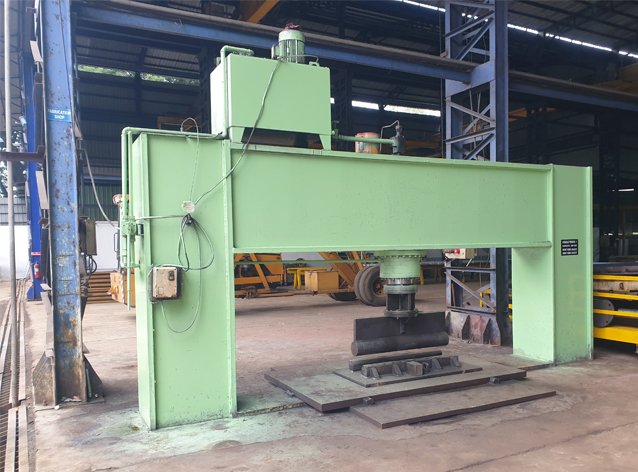
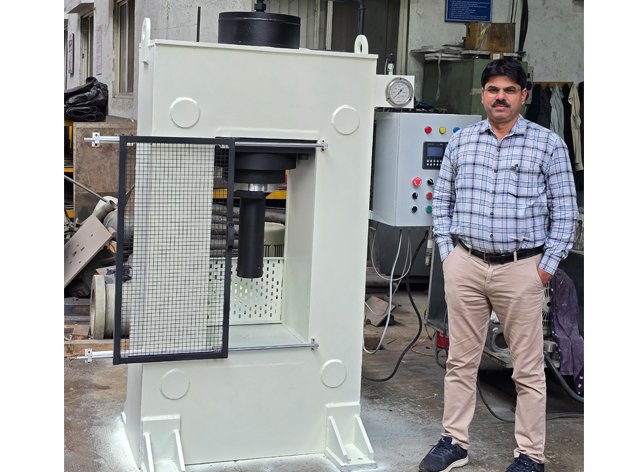
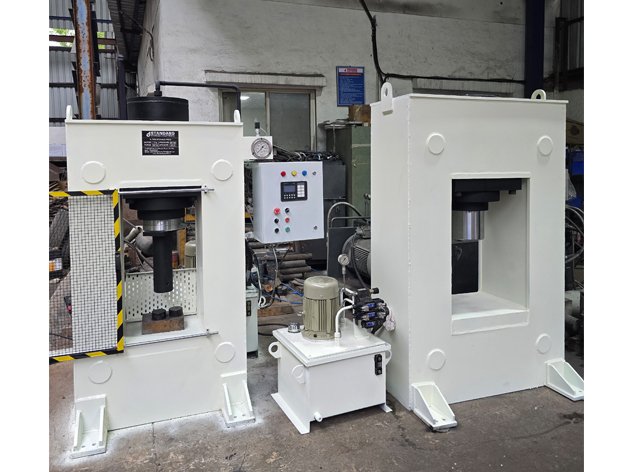
Hydraulic presses built at our Pune works. See more machines in the gallery.
Search for a hydraulic press manufacturer in Pune and you will find builders, traders, job shops and directory listings all mixed together. Pune has more press capacity than almost any other Indian city, which is good for buyers, but it makes the first shortlist harder than it should be.
This guide is written for people who have to specify and buy a press: plant heads, tool room managers, fabricators, moulders and purchase teams. It covers who actually builds presses, the frame types, how tonnage is worked out, what a specification must say, what drives price, what to check on a works visit and how we supply Nashik, Chhatrapati Sambhajinagar, Ahmedabad, Coimbatore, Kerala and the rest of India. For the national view read our guide to hydraulic press manufacturers in India.
Desire Hydraulics at a glance
- What we make
- Hydraulic presses, gravity die casting (GDC) machines, power packs, cylinders and balers
- Works
- Plot No. 4/9, Adhar Industrial Premises Co.op. Society, Sec 10, PCNTDA, MIDC Bhosari, Haveli, Pune, Maharashtra 411026
- Press range
- C-frame, H-frame, four-column, 100 ton, dish end and deep drawing, trimming, die spotting, rubber compression and FRP/SMC moulding presses
- How they are built
- Designed, machined, assembled and tested in-house at the Pune works
- Supplies
- Pune, Nashik, Chhatrapati Sambhajinagar, Ahmedabad, Coimbatore, Kerala, other Indian states and the UAE
- Orders delivered
- 5,000+ across the machine range, in India and the UAE
- Contact
- +91 75585 54709 and nitesh@desirehydraulics.com
- Best first message
- Component drawing, material, operation, die size and how many parts you need per shift
Manufacturer, trader or job shop: who to enquire with
Three kinds of company appear under "hydraulic press manufacturers in Pune". They are not interchangeable.
| Type | What they do | Ask them |
|---|---|---|
| Manufacturer | Designs the frame, fabricates and machines it, builds the hydraulics and tests the press. | Where it is made, who designs the circuit, whether you can watch a test. |
| Trader or dealer | Buys presses or parts from others and resells. | Who really builds it, who services it, who holds spares. |
| Job shop or repair unit | Repairs, retrofits or rebuilds existing presses and cylinders. | Whether they can prove work on a machine of your size. |
Desire Hydraulics is a manufacturer. If a press has to be right for your tooling and serviced for years, that is the relationship that matters.
Why buyers in Pune choose Desire Hydraulics
- The works is in Bhosari. Fabrication, machining, hydraulics and assembly happen at MIDC Bhosari. You can walk the shop and meet the people who will build your press.
- Specified from your job. We ask for the component drawing and die first. Tonnage, bed, stroke and daylight follow from that, not from a catalogue size.
- Every frame type. C-frame, H-frame and four-column presses are all built here, so the recommendation depends on your work, not on what is in stock.
- Own hydraulics. We build power packs and cylinders ourselves, so the team that designs the circuit is the team that fixes it.
- Tested before it ships. Presses are run under pressure at our works before dispatch.
- Service close by. For a Pune plant, a breakdown call is a local trip, not a courier shipment.
- Proven volume. 5,000+ orders delivered across our machine range, in India and the UAE.
See the full range on our hydraulic press machine manufacturers in Pune page.
Types of hydraulic press we build
| Press | Best suited to | Read more |
|---|---|---|
| C-frame | Straightening, bush and bearing fitting, assembly, light forming. Open front for easy loading. | C frame hydraulic press |
| H-frame | Heavier pressing, bending, straightening and forming on a stiff closed frame. | H frame hydraulic press |
| Four-column | Dies, moulds and deep drawing where a large bed and parallel platen matter. | 4 column hydraulic press |
| 100 ton press | A common workshop and production size, built in any of the three frames. | 100 ton hydraulic press |
| Dish end and deep drawing | Forming dished heads and drawn shells with controlled speed and blank holding. | Dish end press |
| Trimming and die spotting | Trimming gates and flash off castings, and fitting dies in the tool room. | Trimming press, die spotting press |
| Moulding presses | Heated-platen compression moulding of rubber, FRP and SMC parts. | Rubber, FRP/SMC |
| Balers | Compacting scrap, plastic, paper and packaging into bales. | Hydraulic baler |
Frame choice is really a question of how the load reaches your tool. An open C-frame bends slightly under load, so it is a poor choice when the die needs to stay parallel. Move to an H-frame or four-column press when the work is heavier or the tolerance is tighter.
How to work out the tonnage you need
Tonnage is the first number buyers quote and the least useful on its own. It comes from the job. The basic relation is simple: force equals pressure times piston area. As a rule of thumb, tonnes are system pressure in bar times piston area in cm² divided by 981.
- Cylinder example. A 250 mm bore has an area of about 491 cm². At 200 bar that gives roughly 100 tonnes.
- Punching example. Force is hole perimeter times thickness times shear strength. A 50 mm hole in 6 mm mild steel at about 350 MPa needs π × 50 × 6 × 350, or roughly 330 kN, about 34 tonnes. Add a margin and you are looking at a 50 tonne press.
- Speed example. Pressing speed is pump flow divided by piston area. 30 L/min into that 491 cm² cylinder moves the ram at about 10 mm per second, which is why presses use a fast approach circuit and slow down only for the working stroke.
- Drawing and forming. These depend on material, blank size, draw depth and friction, and need blank-holder or cushion force on top. Give us the drawing and we will size it.
Never run a press at its rated limit every cycle. Keep a margin, and check that bed size, daylight and stroke suit your die before you look at price.
What a hydraulic press specification must say
Two presses of the same tonnage can be very different machines. On any quotation, make sure each line below has a number against it.
- Tonnage and working pressure, and cylinder bore and stroke
- Bed or bolster size, and daylight (the opening between bed and ram at full stroke)
- Approach, pressing and return speeds
- Power pack: motor kW, pump type, tank size, filtration and oil cooling
- Valves and controls: manual, relay or PLC with touch screen, and pressure and position settings
- Die cushion, ejector or heating platens if your process needs them
- Guarding, two-hand controls, emergency stops and interlocks
- Testing before dispatch, drawings, manual and spare-parts list
- Delivery time, installation, commissioning and warranty terms
Pune's industrial belt and who uses presses here
- Bhosari and Pimpri-Chinchwad: dense engineering and auto-component area, and home to our works. Trials, spares and repairs are quick.
- Chakan and Talawade: automotive plants and their supplier base, needing pressing, bush fitting, straightening and sheet metal forming.
- Chikhali, Moshi and Talegaon: foundries and fabricators who need trimming, straightening and die fitting presses.
- Ranjangaon and Sanaswadi: electrical, engineering and auto-component users.
- Rubber, FRP and plastics units across the city: heated-platen compression moulding presses.
- Scrap and recycling yards: hydraulic balers.
Being in the same belt as the builder shortens downtime. When a valve, seal or limit switch fails, the fix should be hours away, not days.
How to buy a hydraulic press in Pune, step by step
- Define the operation. Pressing, punching, bending, forming, drawing, moulding or baling.
- Collect the details. Drawing, material, thickness, die size, die height and parts per shift.
- Call or visit. Most Pune buyers come to the Bhosari works. Bring drawings and, if ready, the die.
- Get the specification in writing against the list above.
- Compare like with like. Line up quotations on specification, testing and service, not only the total.
- Prepare the site. Level foundation, three-phase supply and clearance for die changes.
- Confirm commissioning and training before you place the order.
What to check when you visit a press builder
- Weld quality and stress relieving on the frame, and machining of bed and ram faces
- Guides and columns on a four-column press: fit, wear and parallelism
- Cylinder finish, rod condition and seals, ideally on a machine already under test
- Neat, supported pipework with accessible filters, gauges and test points
- A tidy control panel with labelled terminals, guarding and emergency stops
- Whether the press is run under load before dispatch, and whether you may watch
- Circuit diagrams, manual and spare-parts list
Ask to see the same things at every builder on your list. Good ones do not mind.
What decides hydraulic press price
There is no honest single price, because there is no single press. The price moves with:
- Tonnage and working pressure
- Frame type and weight of steel
- Bed size, stroke and daylight
- Power pack, pump, valves and cooling
- Controls: manual, relay or PLC
- Die cushion, ejector or heating platens
- Guarding and safety equipment
- Transport, installation and commissioning
An undersized press that is cheap today costs more in downtime and rework. Compare on specification and fit to your die first, then on price.
Safety and maintenance in short
Guarding, two-hand controls or light curtains, emergency stops and a set relief valve are basic. ISO 16092-3 is the international safety standard for hydraulic presses, and India's Factories Act requires dangerous parts of machinery to be fenced. Confirm your exact obligations with your safety officer.
Most hydraulic faults trace back to dirty or hot oil. Keep it clean, at level and within temperature, change filters on schedule, and check hoses, seals and fittings for leaks. Inspect guides, columns and limit switches too.
Nashik, Chhatrapati Sambhajinagar, Ahmedabad, Coimbatore, Kerala and the rest of India
The process is the same for a machine outside Pune: drawings and a call, a written specification, manufacture and testing at our works, dispatch, then installation and commissioning at your site. Transport, installation and commissioning are confirmed in the quotation.
- Nashik: engineering, electrical and auto-component units around Ambad, Satpur and Sinnar. A few hours by road from Pune.
- Chhatrapati Sambhajinagar (Aurangabad): the auto and industrial component belt around Waluj and Chikalthana.
- Ahmedabad and Gujarat: engineering, pump, electrical and fabrication units around Naroda, Odhav, Vatva and Sanand.
- Coimbatore and Tamil Nadu: pump, motor, foundry and textile machinery makers, plus Chennai and Hosur.
- Kerala: rubber, fabrication and engineering units around Kochi, Thrissur and Palakkad.
- Bengaluru, Hyderabad, Delhi NCR and Ludhiana: quoted the same way.
- UAE: we have delivered machines there and evaluate export enquiries.
Outside Pune, agree three things at quotation stage: who installs and commissions, how spares reach you, and how a service call is handled. Read the national view in Hydraulic Press Manufacturers in India.
What to send for a hydraulic press quotation
- Component drawing, material and thickness
- Operation: pressing, punching, bending, forming, drawing, moulding or baling
- Required tonnage, if you know it
- Die size, die height, stroke and daylight needed
- Parts per shift and target cycle time
- Automation level and safety requirements
- Delivery location, and for overseas enquiries the country and electrical supply
Use the enquiry form or call +91 75585 54709. If you do not have every detail, send what you have and our engineers will ask for the rest.
Hydraulic press manufacturers in Pune, Maharashtra: frequently asked questions
Who are the hydraulic press manufacturers in Pune Maharashtra?
Pune has a dense cluster of press builders around Bhosari, Pimpri-Chinchwad, Chikhali, Talawade and Chakan. Desire Hydraulics is one of them: it designs, machines, assembles and tests hydraulic presses at its works at MIDC Bhosari, Pune, and has delivered 5,000+ orders across its machine range in India and the UAE.
Who is the top hydraulic press manufacturer in Pune Maharashtra?
There is no official ranking, so treat any list that names a number one with caution. Judge builders on in-house manufacturing, a written specification against your die, testing before dispatch, local service and references. Desire Hydraulics builds every press at its Bhosari works, tests it before dispatch and supports customers across India, which is why it belongs at the top of a serious shortlist.
Which is the best hydraulic press manufacturer in Pune?
The best builder is the one whose press fits your tooling and whose service you can reach quickly. Visit the works, ask for tonnage, stroke, daylight and bed size in writing, and compare at least two quotations. Desire Hydraulics welcomes that comparison at MIDC Bhosari.
Is Desire Hydraulics a hydraulic press manufacturer or a trader?
A manufacturer. Frame fabrication, machining, hydraulics and assembly are done at the Bhosari works, and the company also builds its own power packs and cylinders.
Where is Desire Hydraulics located?
Plot No. 4/9, Adhar Industrial Premises Co.op. Society, Sec 10, PCNTDA, MIDC Bhosari, Haveli, Pune, Maharashtra 411026. Call +91 75585 54709 before you visit.
What types of hydraulic press does Desire Hydraulics make?
C-frame, H-frame and four-column presses, 100 ton presses, dish end and deep drawing presses, trimming presses, die spotting presses, rubber compression moulding machines, FRP/SMC moulding machines and hydraulic balers, all specified to the customer's job.
What is the difference between a C-frame, H-frame and four-column hydraulic press?
A C-frame has an open front for easy loading and suits lighter work such as straightening, bush fitting and assembly. An H-frame is a stiffer closed frame for heavier pressing and forming. A four-column press has a large bed and guided platen, which suits dies, moulds and deep drawing where parallelism matters.
How do I choose the tonnage of a hydraulic press?
Work from the operation. Punching depends on hole perimeter, thickness and shear strength, forming depends on material and shape, and moulding depends on projected area and moulding pressure. Add a working margin so the press does not run at its rated limit every cycle. Sending the component drawing lets our engineers size it for you.
How is hydraulic press force calculated?
Force equals pressure multiplied by piston area. In practice, tonnes are roughly system pressure in bar times piston area in cm² divided by 981. A 250 mm bore cylinder at 200 bar gives about 100 tonnes.
What is the price of a hydraulic press machine in Pune?
There is no single price because there is no single press. Cost follows tonnage, frame type, bed size, stroke, daylight, power pack, controls, safety equipment, tooling and installation. Send your job details for a written quotation on a defined configuration.
What information should I send to get a hydraulic press quotation?
The component drawing, material and thickness, operation, tonnage if known, die size and die height, stroke and daylight needed, production per shift, automation level and delivery location.
Can a hydraulic press be customised?
Yes. Bed size, stroke, daylight, speeds, cylinder arrangement, die cushion, ejector, heating platens, controls and guarding can all be specified around your tooling and cycle.
Do you make a 100 ton hydraulic press?
Yes. A 100 ton press can be built as a C-frame, H-frame or four-column machine depending on the job. See our 100 ton hydraulic press machine guide for specifications and price factors.
Which hydraulic press is best for deep drawing?
A four-column or H-frame press with a proper blank-holder or die cushion, controlled pressing speed and enough stroke and daylight for the drawn depth. The press is sized from the blank, drawing depth and material.
Which press is used for rubber moulding and FRP/SMC moulding?
A four-column heated-platen compression press. Platen size, moulding pressure, heating and cycle control are set by the mould, and we build rubber compression and FRP/SMC moulding machines for this.
Which hydraulic press is used for straightening, bush pressing and bearing fitting?
Usually a C-frame or H-frame press, chosen by component length and force. A gauge and adjustable pressure setting help you control the load on the part.
What is the difference between a hydraulic press and a mechanical press?
A hydraulic press delivers full force at any point in the stroke and lets you set the pressure and dwell. A mechanical press is faster on light, high-volume blanking but delivers rated force only near the bottom of the stroke.
What are the advantages of a hydraulic press?
Full tonnage anywhere in the stroke, adjustable pressure and speed, overload protection through the relief valve, long stroke, dwell for forming and moulding, and simple tooling changes.
What are the limitations of a hydraulic press?
Cycle time is slower than a mechanical press on light high-speed work, and the hydraulic system needs clean oil and regular maintenance.
What working pressure do hydraulic presses use?
Most industrial presses run between roughly 150 and 250 bar. The exact figure is a design choice between cylinder size, pump and motor, and is stated in the specification.
What motor and power supply does a hydraulic press need?
A three-phase industrial supply sized for the power pack. As a guide, motor kW is about pressure in bar times flow in L/min divided by 600 times pump efficiency, so 200 bar at 30 L/min needs roughly 12 kW, and the next standard motor is 15 kW.
Can a hydraulic press be automated with a PLC?
Yes. A PLC can sequence approach, pressing, dwell, release and return, with position sensors, pressure switches, counters and a touch screen for parameters.
What safety features should a hydraulic press have?
Guarding, two-hand controls or light curtains where the operator reaches into the die area, emergency stops, a pressure relief valve, hydraulic locks for die changes and interlocks. ISO 16092-3 is the international safety standard for hydraulic presses, and the Factories Act requires dangerous machine parts to be fenced. Confirm the exact requirement with your safety officer.
What maintenance does a hydraulic press need?
Keep the oil clean, cool and at level, change filters on schedule, check hoses, seals and fittings for leaks, and inspect guide bushes, columns, limit switches and safety devices. Follow the schedule supplied with the machine.
Which hydraulic oil is used in a press?
Usually an anti-wear mineral hydraulic oil of ISO VG 46, sometimes VG 32 or VG 68 depending on ambient temperature and the pump. Use the grade in the machine manual.
How long does a hydraulic press last?
With clean oil, correct alignment and a maintenance routine, a well-built press runs for many years. Frame design, duty cycle and how close the press is run to its rated load matter most.
How long does delivery take?
It depends on size and customisation. The delivery schedule is stated in the quotation, so confirm it before ordering.
Is installation and commissioning available?
Yes. Transport, installation and commissioning are confirmed in the quotation, so check the scope and cost before ordering.
Can I visit the factory before ordering?
Yes. The works is at MIDC Bhosari, Pune. Call +91 75585 54709 to arrange a time and bring your drawings and die.
Do you supply hydraulic presses to Nashik and Chhatrapati Sambhajinagar (Aurangabad)?
Yes. Both are a few hours by road from Pune, so visits, delivery and service calls are straightforward.
Do you supply hydraulic presses to Ahmedabad and Gujarat?
Yes. Presses are built and tested in Pune, then dispatched to Ahmedabad, Rajkot and other Gujarat locations. Transport and commissioning are confirmed in the quotation.
Do you supply hydraulic presses to Coimbatore and Kerala?
Yes. Desire Hydraulics supplies Coimbatore, Chennai, Kochi, Thrissur, Palakkad and other locations in Tamil Nadu and Kerala. Agree installation, commissioning and spares support in the quotation.
Do you supply hydraulic presses across India and to the UAE?
Yes. Desire Hydraulics has delivered machines across India and in the UAE. An export order needs a technical package, electrical match, shipping and installation to be agreed before production.
What is the difference between a manufacturer, supplier and dealer?
A manufacturer designs and builds the press. A dealer or trader buys from someone else. Ask who designs it, where it is made, who commissions it and who supplies spares.
Do you also make hydraulic power packs and cylinders?
Yes. Power packs, cylinders, balers, trimming presses and die spotting presses are built at the same works, so one team designs the frame and the hydraulics.
What after-sales support is available in Pune?
The works is at MIDC Bhosari, so a service call to a Pune plant is a local trip. Spares, repairs and support terms are stated in the quotation.